Nigeria Car Dealer Sourcing Guide: "Core Document Acquisition Checklist" for Purchasing Used Cars from China
I. How the Document Flow Works
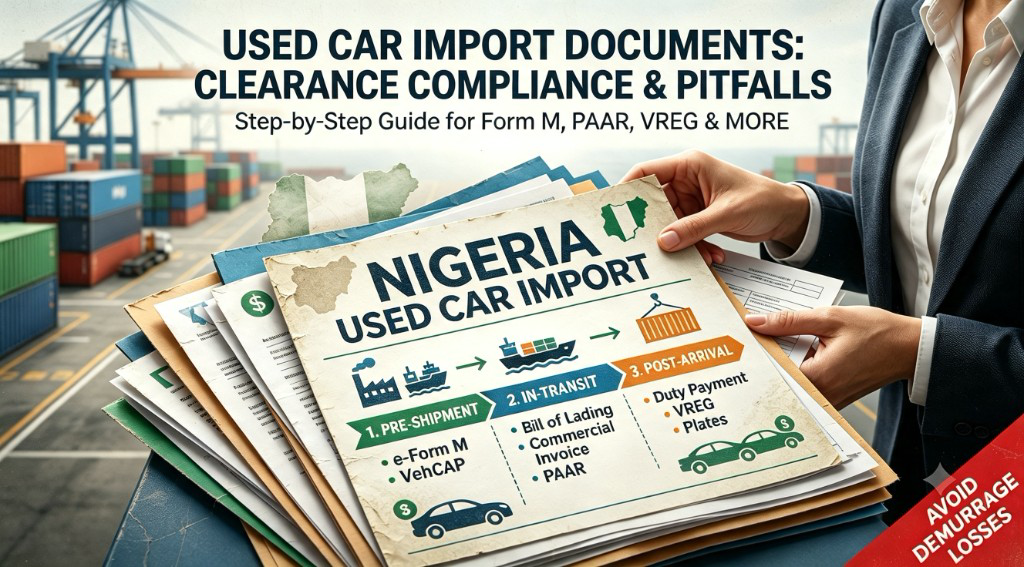
Before asking for files, understand how the paperwork moves between the Central Bank of Nigeria (CBN), Nigerian Customs Service (NCS), and your Chinese supplier:
Proforma Invoice (PI) → Form M Application → Pre-Shipment Inspection in China (CoC) → VehCAP / SONCAP Activation → Submit B/L & Invoice → PAAR Issuance → Customs Clearance
Key Responsibilities:
Sourcing & FX: Apply for Form M at your bank using the supplier's Proforma Invoice (PI).
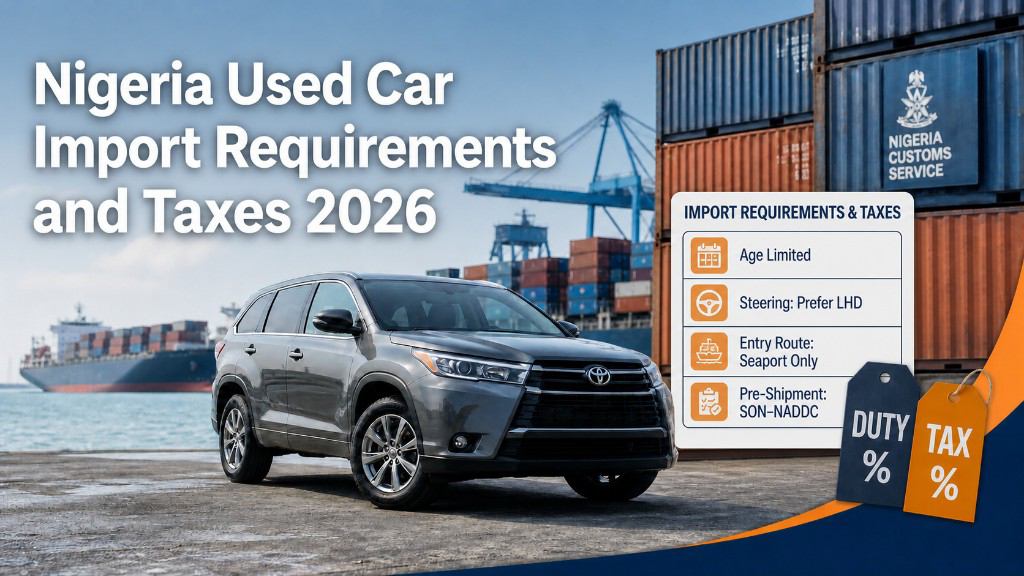
Pre-Shipment Inspection: The supplier works with a SON-authorized agency (SGS, CCIC, Intertek, Cotecna) in China to inspect the car and get a CoC (Certificate of Conformity).
Certificate Conversion: Use the CoC, B/L, and invoice to activate your VehCAP / SONCAP certificate online in Nigeria.
PAAR & Release: Customs reviews your invoice, B/L, Form M, and VehCAP/SONCAP to issue the PAAR for final clearance.
II. Document Checklist from Chinese Suppliers
Documents | When to Get It | Main Purpose | Key Checkpoints |
|---|---|---|---|
Proforma Invoice (PI) | Before deposit | Apply for Form M at your bank | Must list accurate VIN, model year, trim, FOB/CIF price, and destination port. |
Sales Contract | Before deposit | Fix price terms, timeline, quality, and return terms | Strictly check the VIN, vehicle condition, and emissions standards. |
Certificate of Conformity (CoC) (Provided by an authorized inspection agency) | Before the ship sails | Needed to generate official VehCAP | VIN, engine number, year, and invoice number must match customs declarations 100%. |
Bill of Lading (B/L) | 3–5 days post-departure | Main title document to get Delivery Order | Consignee must match Form M holder. Description must list all correct VINs. |
Certificate of Origin | Upon B/L issuance | Proves Chinese origin for bank/customs compliance | Issued and stamped by CCPIT or China Customs. |
Commercial Invoice (CI) | Before departure | Customs valuation & PAAR price reference | Price and details must match Form M exactly. Avoid under-invoicing to prevent reassessment. |
Packing List (PL) | Before departure | Physical vehicle breakdown for port inspection | Details displacement, curb weight, color, seat count, and matching VINs. |
Vehicle Registration Scan | At contract signing | Confirms exact age and legal export status | Check manufacture date and verify status shows "Pending Export"(待出口). |
China Export License | Before customs release | Proves official export approval | Seller name on license must match supplier on contract and invoice. |
Inspection Report | Before final payment | Independent car condition assessment | Review photos of the frame, chassis, and engine bay carefully. |
III. Three Practical Red Flags to Watch
1. Never Delay the CoC Inspection
Cars must be inspected at the loading port in China before departure.
Tip: Make sure your supplier applies for inspection as soon as they book the shipping space. Never try to get a certificate after the ship sails—this often leads to rejection in the VehCAP/SONCAP system or severe fines.
2. Watch Out for "Near-New" Cars (<180 Days Old)
If you order zero-mileage or lightly used vehicles registered in China for under 180 days, Chinese law requires an After-Sales Service Confirmation from the automaker before an export license can be issued.
Tip: Confirm your supplier has this confirmation before paying, or your shipment could be delayed for months because they can't get an export license.
3. Maintain Zero Tolerance for VIN Errors
Nigerian customs systems cross-check every single character automatically.
Tip: Cross-check the VIN across all 5 key documents: PI, CI, PL, B/L, and CoC. If there's even a single typo, fix it before the original B/L is printed.