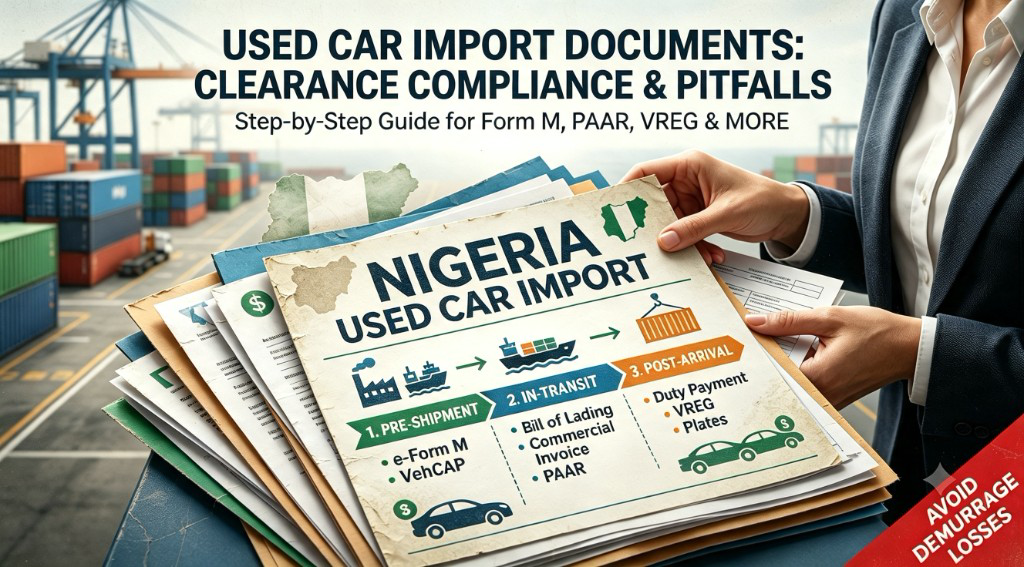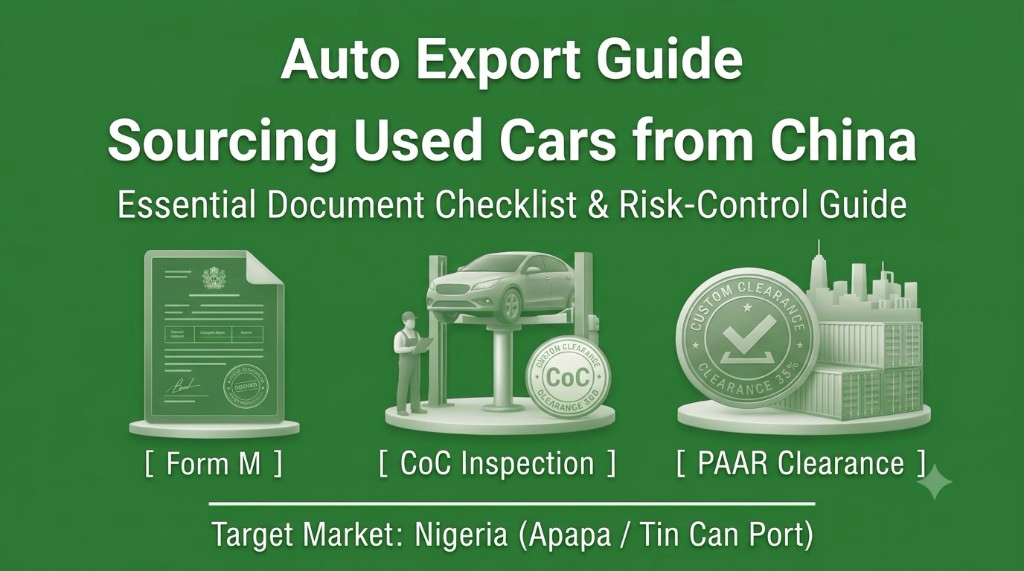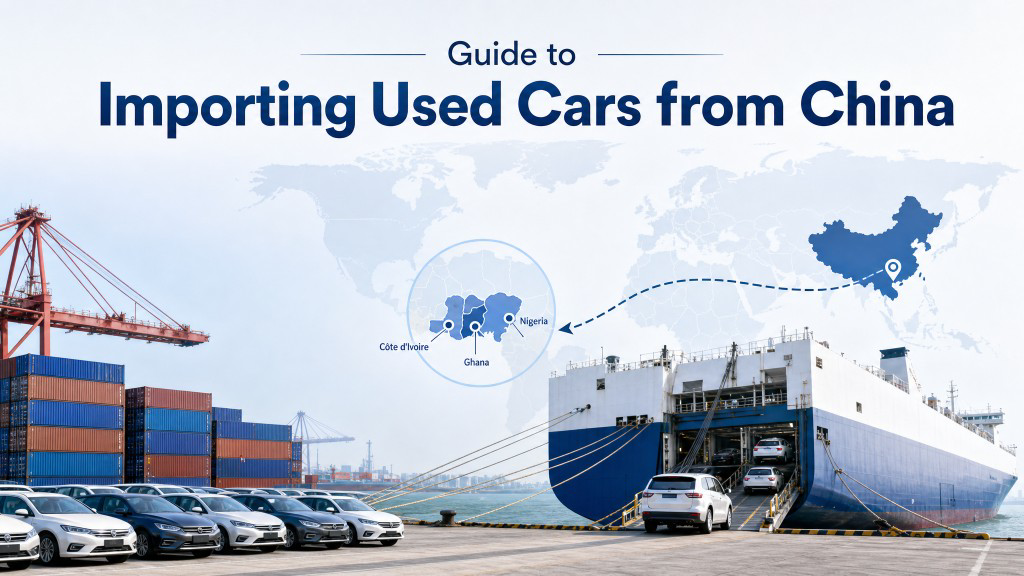
Nigeria Imported Used Cars: Admission Requirements and Import Duties & Taxes (2026)
Bringing a used car(Tokunbo) into Nigeria is not as simple as paying the price and shipping it. The Nigerian Customs Service (NCS) has tightened admission rules. If you're planning to import, here's what you need to know.
1. Eligibility Checklist

1.1 Age limit: usually no more than 12 years from manufacture
Nigeria Customs Service (NCS) checks age and dutiable value through the VIN Valuation system. Market practice is clear: passenger vehicles older than about 12 years from the date of manufacture are hard to import legally. For 2026, that usually means 2014 or newer.
1.2 Seaport only — land-border vehicle imports are banned
Since 2017, the Federal Government has banned importation of new and used vehicles through land borders. Cars must clear through designated seaports. Common gateways include Apapa and Tin Can Island in Lagos, and Onne in Rivers State.
1.3 Steering: prefer left-hand drive (LHD)
Nigeria drives on the right, and the fleet is mostly LHD.
1.4 Pre-shipment conformity: SON–NADDC VehCAP
In March 2026, the National Automotive Design and Development Council (NADDC) and the Standards Organisation of Nigeria (SON) launched the Vehicle Conformity Assessment Programme (VehCAP). Under this policy, new and used vehicles need pre-shipment certification before Form M approval, Customs valuation, port processing, clearance, and market entry.
1.5 VIN registration & duty verification: VREG
VREG is the national vehicle registry under the Federal Ministry of Finance. It supports VIN enrolment, duty-status checks, and vehicle history.
2. Import tax structure: stacked on CIF, not a single duty line
Nigeria used car imports usually involve 3 main charges:
Import Duty: 20%, calculated on CIF.
NAC Levy: 5%, calculated on CIF.
VAT: 7.5%, charged on the total amount after adding CIF, duty, NAC, and other applicable charges.
In addition, larger-engine vehicles may pay Green Tax (0% / 2% / 4%), depending on engine size.
Some years or ports may also include ETLS, CISS/FOB levy, depending on current customs practice.

3. Worked example (structure only — not a quote)
Assumptions:
FOB purchase = USD 10,000
CIF after freight + insurance ≈ USD 11,200
Used passenger car, 1800cc (Green Tax 0%)
Customs values at invoice CIF (real cases may be higher)
Core calculation logic:
1. Import Duty = 11,200 × 20%
2. NAC Levy = 11,200 × 5%
3. VAT = (CIF + Duty + NAC + other included items) × 7.5%
4. Plus ETLS / FOB Levy / Surcharge if applicable
Pay what appears on the NCS assessment / Combined Duty Assessment. Run a VIN-based value estimate before you buy.
4. Pre-import checklist
1. VIN decodes cleanly; manufacture date is within the import window.
2. LHD unit; condition and engine size fit your tax budget.
3. Entry planned via Lagos or Onne seaport — not a land border.
4. Export country can arrange VehCAP / related pre-shipment certification.
5. Nigeria TIN ready; bank can open e-Form M.
6. Rough tax model on CIF + current rates, with buffer for higher Customs value and FX moves.
Confirm HS code, prohibitions, and latest fiscal measures on Customs/CET portals.