Nigeria Tokunbo Import Documentation Requirements
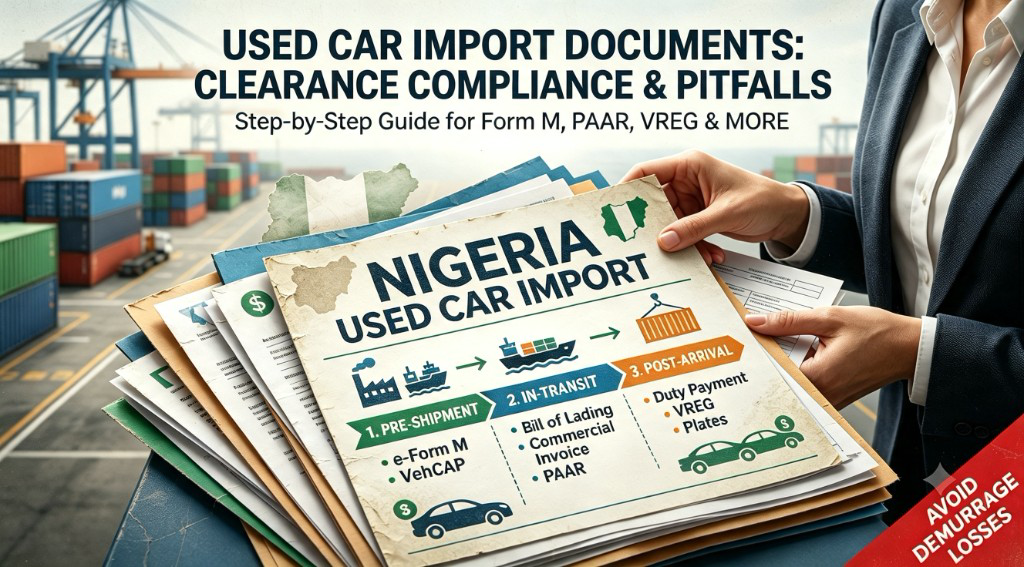
In Nigeria's used vehicle import trade, compliance—rather than tariffs or sourcing—determines profitability. Most port detentions and financial losses stem from incorrect document order, missing forms, or conflicting data. A rejected Form M, blocked PAAR, or VIN discrepancy leads directly to port detention and costly demurrage. To avoid these issues, finalise all documentation before the vessel sails. The documentation process comprises three distinct phases:
1. Pre-shipment Phase
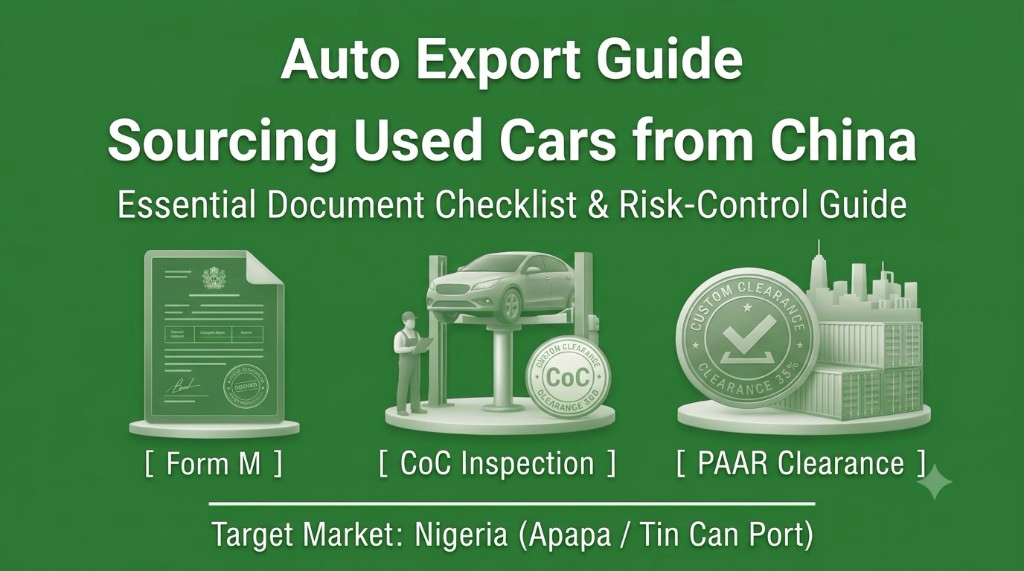
Secure the e-Form M first, as it is required for all subsequent customs and tax clearances. Prepare the proforma invoice, marine insurance, and the VehCAP/SON compliance certificate. Obtain the VehCAP before loading; acquiring it post-shipment or post-arrival risks shipment seizure or forced return.
2. Sea Transit Phase
Submit the complete declaration package (commercial invoice, packing list, bill of lading, and CCVO) to Customs well before arrival. Upon verification, Customs will issue the PAAR, which is required for duty payment and expedited clearance. Data across vehicle specifications, declared value, and origin must match perfectly to avoid immediate detention and storage penalties.
3. Post-arrival Phase
Clearance does not end with duty payment and customs release. Vehicles require VREG registration and official license plates before they can be legally driven, sold, or operated on public roads.
Due to frequent regulatory updates in Nigeria, import requirements should always be verified through official customs and vehicle registration portals. Engaging a licensed local clearing agent to supply a verified document checklist can prevent clearance delays.